Happy New Year!
It’s January 3rd, and the holiday season has come and gone. I thought I would take some time to reflect on some of the holiday differences in Japan.
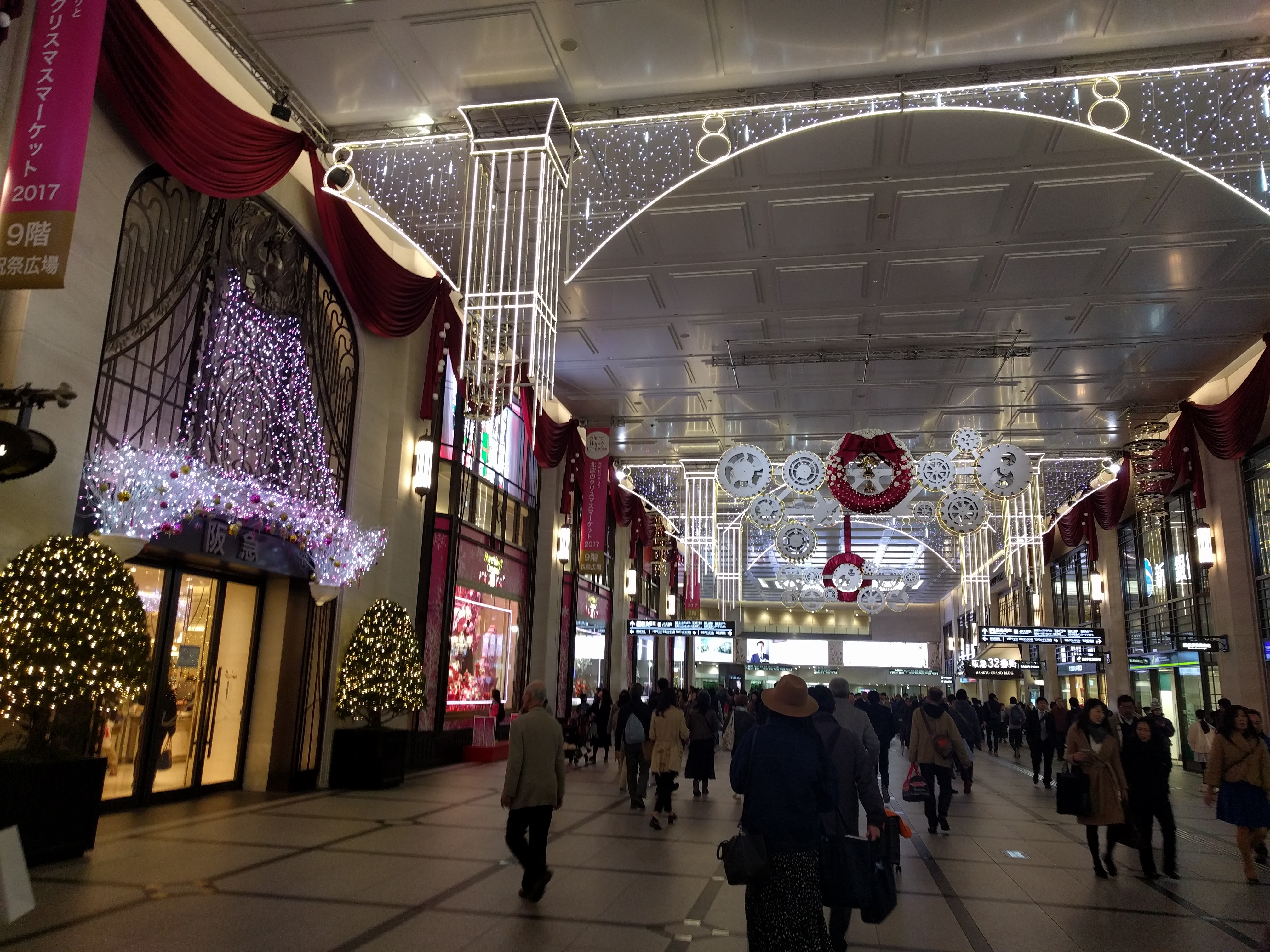
Light-ups
Starting around the end of November, in places like large commercial areas and stations, you will be able to find some amazing lighting displays and other decorations. While people don’t typically decorate their houses in lights, there are many large scale lighting displays that will wow you, including things like this Winter display, which plays fast and loose with the definition of ‘Winter’.
忘年会 – Bounenkai
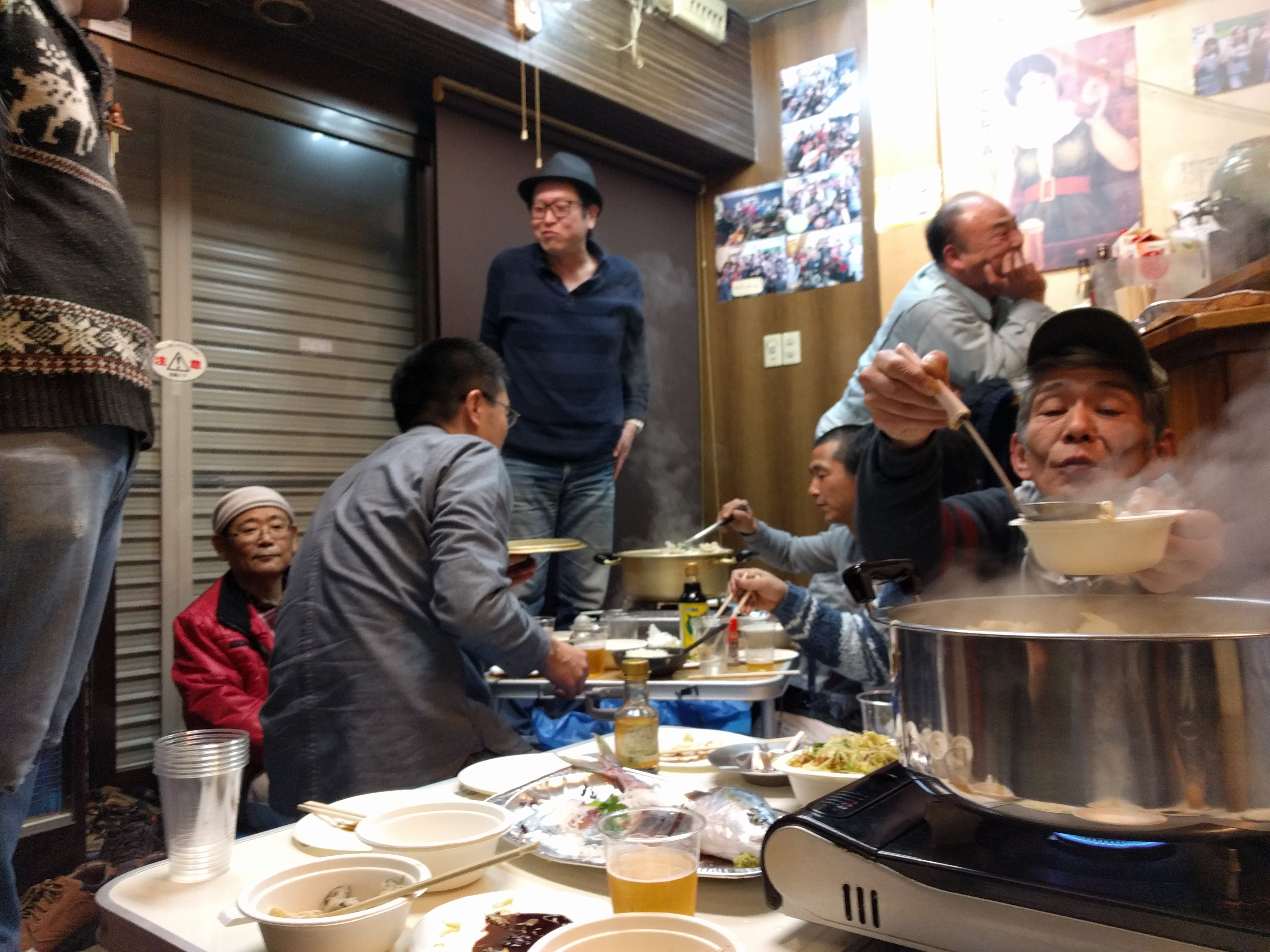
Rather that having a New Year’s Eve party, Japanese people often go to a year-end party called Bounenkai, or more literally, ‘forget the year’ party. These are held in December and usually involve a lot of drinking with acquaintances, coworkers, and friends. Unlike New Years Eve parties, there is no fixed date, so people may end up going to several in one year. I went to the party at a local standing bar and had a great evening with drinks and hot-pot, and afterwards, some Karaoke after the party moved to another bar. And then I managed to make it home, presumably, since that’s where I woke up, I can only guess though! More Photos
Christmas
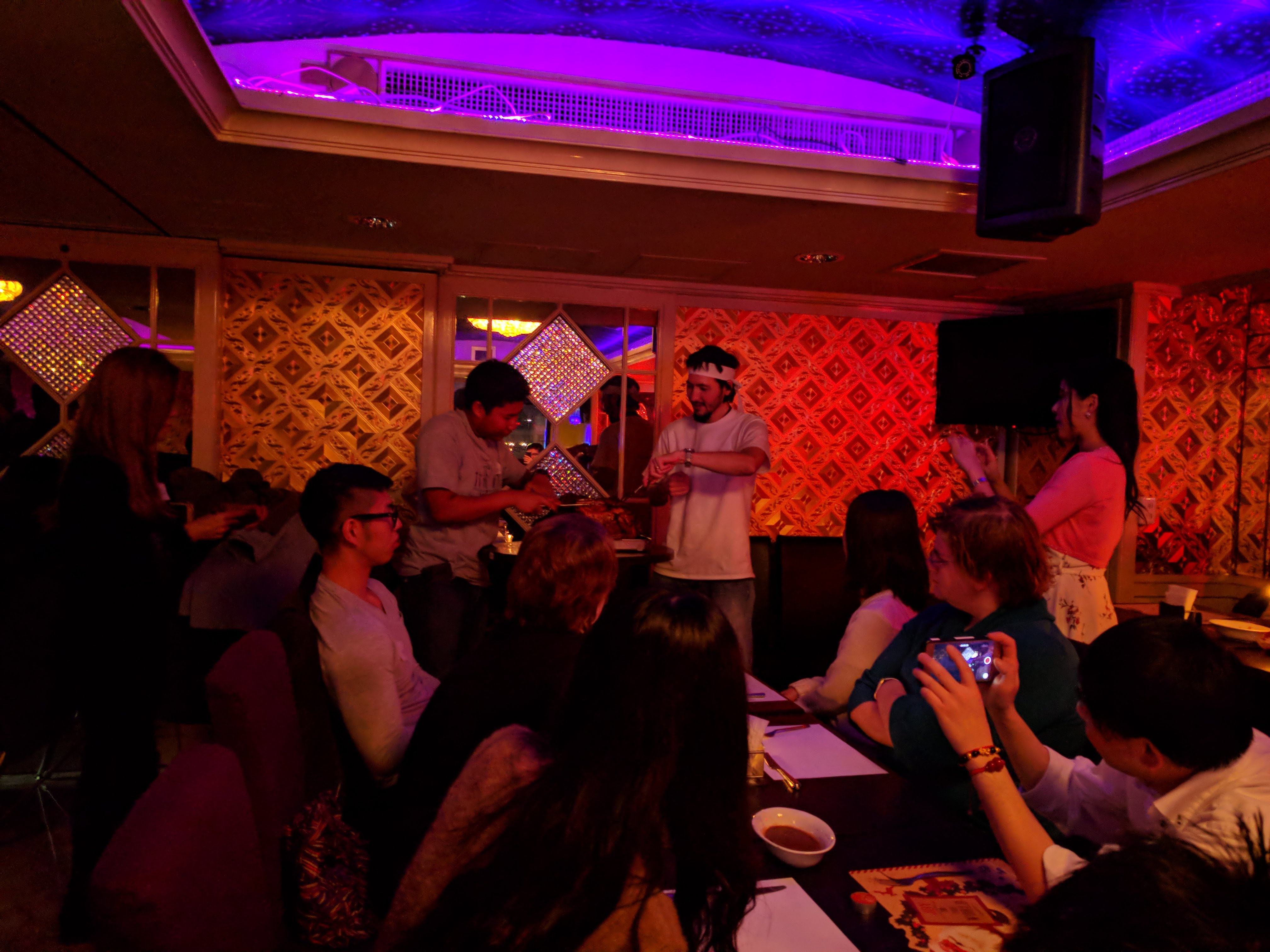
Christmas in Japan is not quite the same as back home. While there are plenty of decorations, Christmas music, and eating of chicken, it’s not a national holiday, and is largely celebrated by families with children, and also is a popular day for couples to go do romantic date-like activities. A lot of the imagery is there, including trees and Santa and reindeer, but its largely overshadowed by other holiday events as far as importance goes. This year, I found a meetup group that was hosting a traditional Christmas dinner, with a real turkey and everything.
正月 – New Years
In Japan, New Years lasts from the 1st to the 3rd, and is the time of year where people go see their family (rather than Christmas). There are many traditional things to do this time of year, and traditional foods as well. I didn’t experience all of them, but there were a few New Years activities I was able to do:
年賀状 – New Years Card
Rather than Christmas cards, Japanese people send 年賀状 (Nengajo), which is a non-folded card sent like a postcard, often featuring patterns related to which animal the next year is (this is the year of the dog). You can pick them up at the post office starting from about 50 Yen (~$0.50) each, including postage. If you mail the cards out before the ~27th, it will be delivered on New Year’s Day. There are also special rules, such as not sending one to a person who has had a family member die that year.
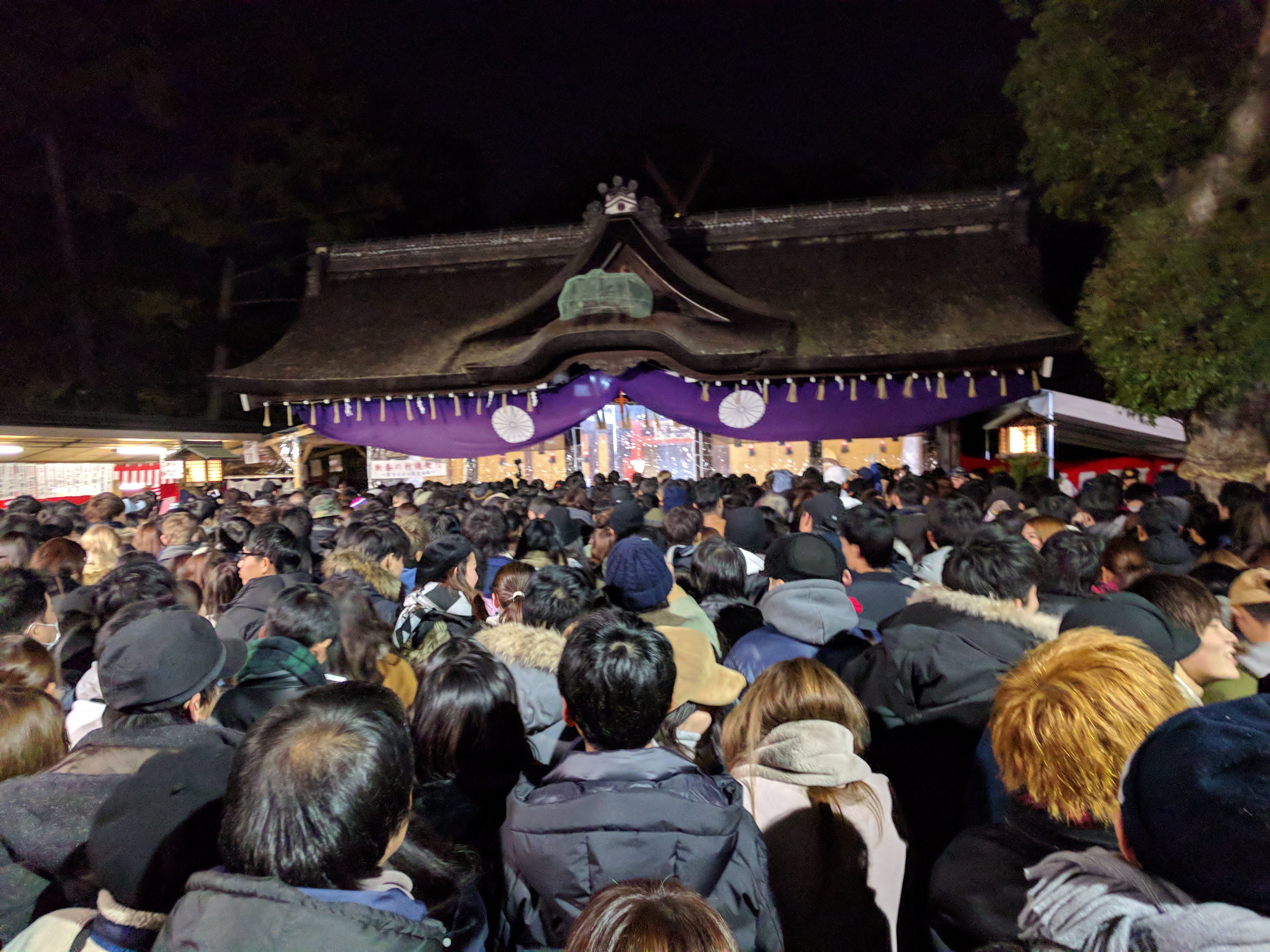
初詣 – First Shrine Visit
Some time during the New Year break, Japanese people often visit a shrine as part of a tradition called 初詣 (Hatsumode). This year, I went with several friends to the nearby Sumiyoshi Taisha, which is one of the most popular shrines to visit during the new year, with over 2 million people annually during the first 3 days of the year. It was certainly packed when we went, and even when we were leaving at 1:30AM, there was still a large line of people outside waiting to get in. More Photos
Traditional New Year’s food
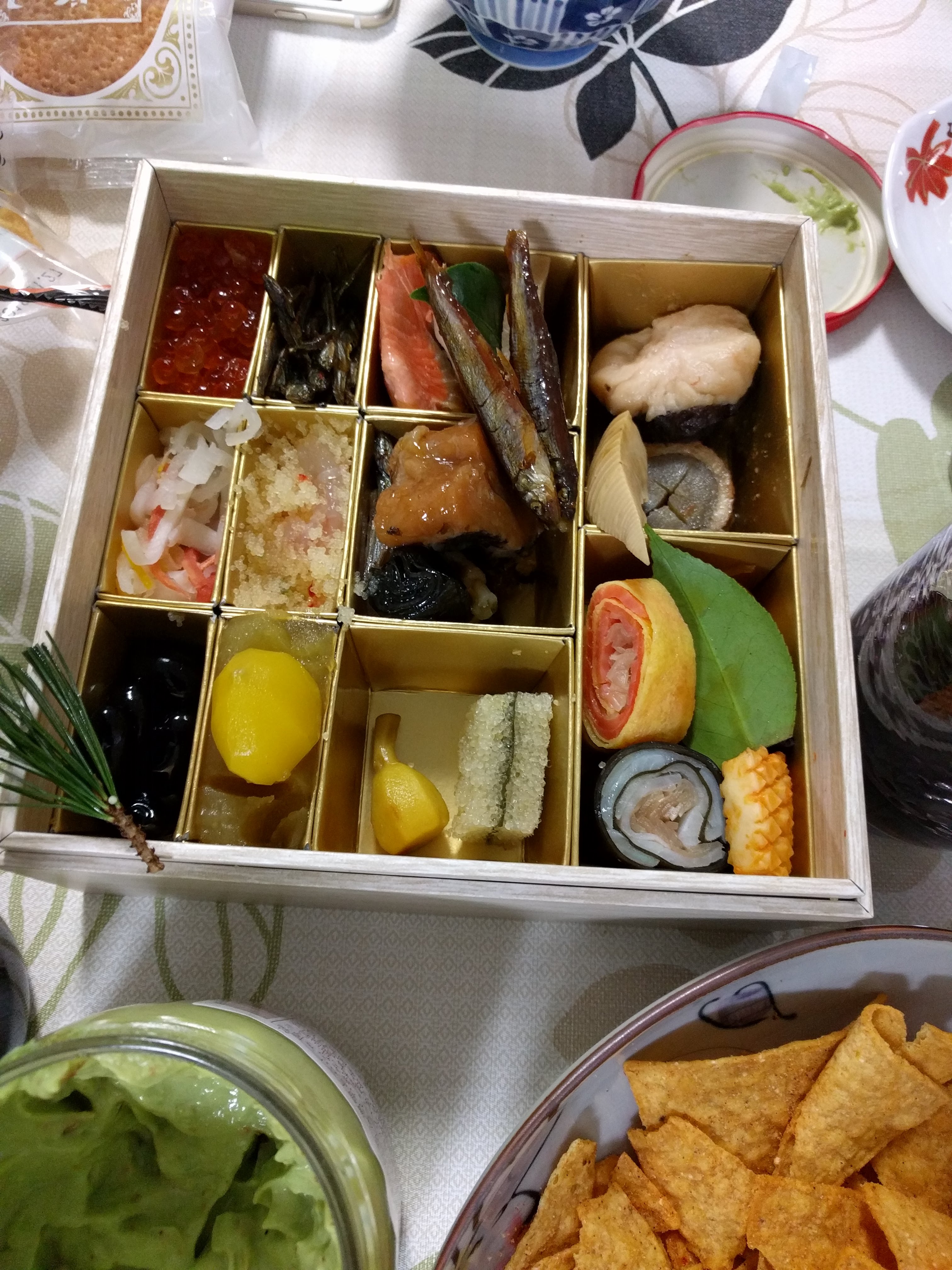
While Mochi is often a large part of the new years food traditions, I didn’t end up eating any. However I was able to try some おせち (osechi), a very traditional boxed new years food. It consists largely of pickled fish, fish eggs, sweet beans, shrimp, and a bunch of other stuff I couldn’t identify. It was interesting, or less diplomatically, I’m glad I tried it so I never have to eat it ever again. It does look very nice though, I give them 10/10 for presentation.
I also cooked up some 年越しそば (Toshikoshi soba), which is a special soba dish for new years. It turned out really well, actually. I’ve never tried to make my own dashi soup stock before from scratch, but you can really taste the difference between the powdered stuff.
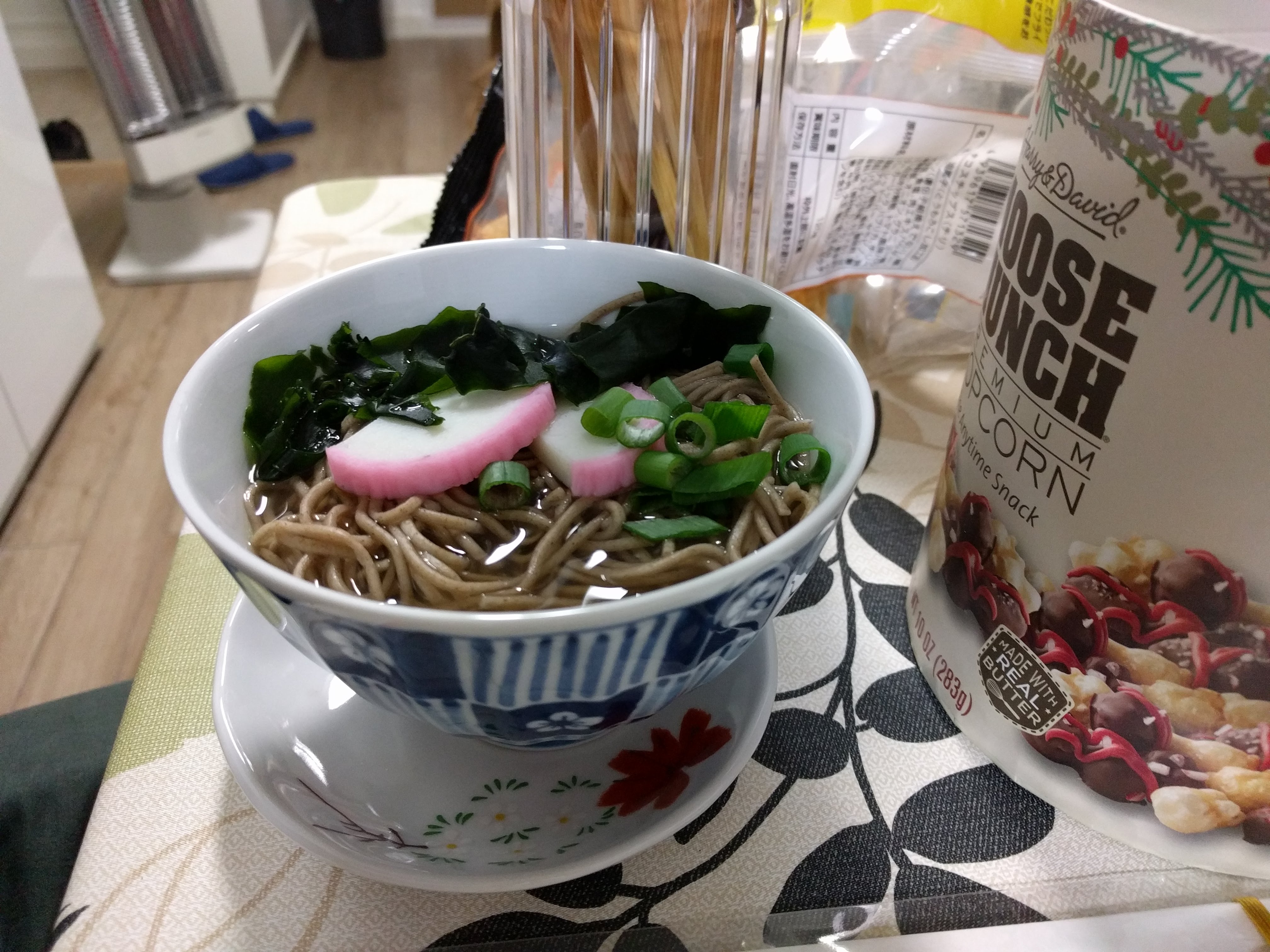
And that about wraps up my Japanese holiday time post. I had a great time, but I’m looking forward to spending Christmas and New Years time back in Canada next year!
Pingback: Living in Japan: Month Five – Garrett Kapp's Blog