Something that I’ve been interested in for a while, but had never pulled the trigger on, is going to a Japanese food cooking class. It is a bit intimidating; I can converse okay, but there is lots of cooking vocabulary that I don’t understand, and I don’t want to be a nuisance in a class. Thankfully, I found a meetup group that is very casual and is run in a small restaurant, where the owner speaks English and can translate for the cook. Since it’s on Meetup, its almost entirely been non-Japanese people attending so far, though they just started doing classes, so who knows who will show up next time.
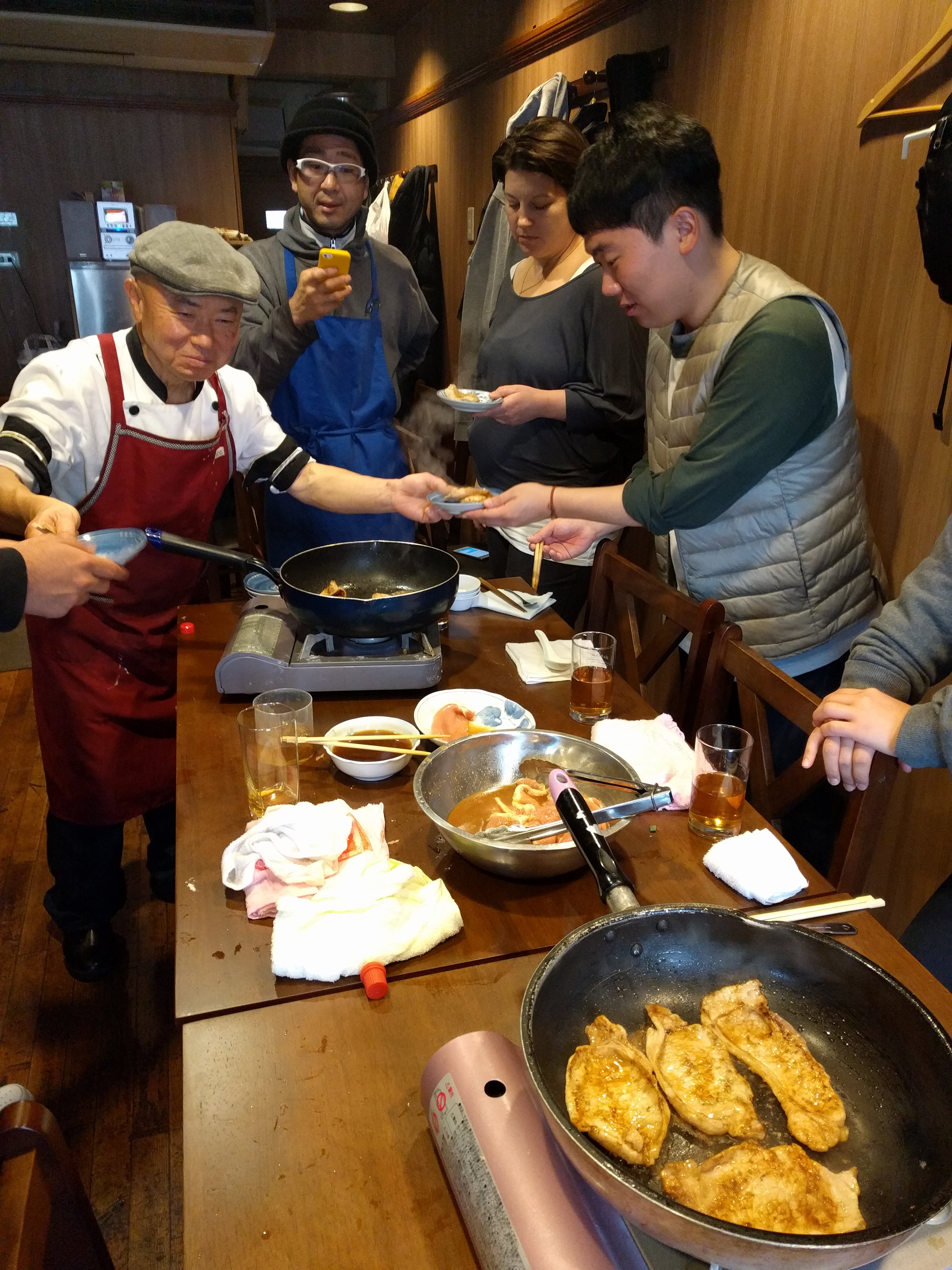
It’s a new restaurant that specializes in curry. There is just two people: the younger owner, Kazuki, and the old cook, Shigeru(?? Kanji is hard), who has been working in restaurants for 55 years. You can tell the cook really enjoys his work by how excited he gets showing other people how to make things, his passion is really contagious. I’ve been to two of the classes so far, and there have been 3 and 8 learners attending, respectively. Together, we have cooked a bunch of delicious dishes.
One pattern I’ve noticed about Japanese cooking is there seems to be a few base ingredients that are used in everything. If you want to cook Japanese food, you are going to want some: Soy Sauce, Mirin (sweet sake), Sake, Dashi (soup stock), Rice, and Salt. All of that stuff lasts forever, so keep it on the shelf. Next up, depending on the recipe, you might want some Panko, Pepper, Ponzu, Miso, Starch, Flour, Ginger, Garlic, there is something called Hon Tsuyu that the chef uses a bunch, and interestingly Worcestershire sauce is also on the list. Congratulations. Now you are probably an egg, meat, veggie, noodle and/or tofu away from making like 99% of Japanese dishes. Or maybe I’m full of shit.
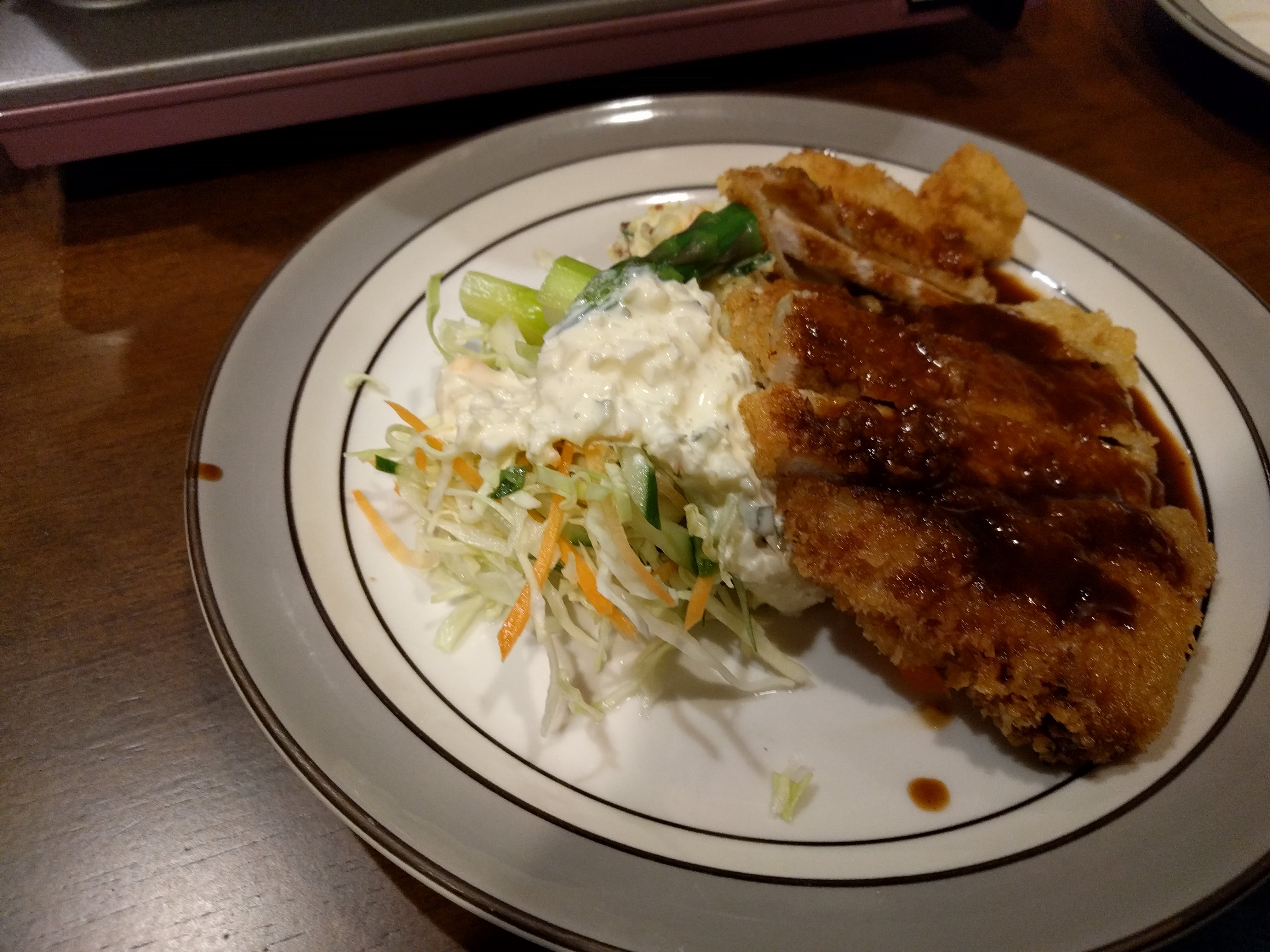
Back to class, on the first day, we ended up focusing on Tonkatsu, a fried pork cutlet. I’ve tried to make one before and let me tell you, it turned out extra tough and gross, so I was looking forward to some tips from the master. He showed us the pork he has prepared the day before by marinating it in grated onions, garlic, and a bit of tobasco, which apparently helps keep it tender. He showed us how to prepare the breading and had us bread the pork, before showing us how to get the proper oil temperature and cook them (a piece of batter should float back up and be bubbling immediately if it’s 180 degrees). In the end, they turned out delicious. We continued to also batter and cook some extra meat and veggies to take home with us.
I was mostly focusing on the overall recipe and techniques, but a few of the other people there were trying to get specifics of the recipe which I found was really funny. It seemed to me that the chef, who had been doing this for almost twice as long as I’ve been alive, had no idea how much he used. He was just eyeballing all of it, tasting a bit, and adjusting when necessary. It didn’t stop some of the people from continuing to try to ask questions though. I think he tried to show us his way, which was to try a spoonful of sauce, for instance, to judge the flavor. If its too bitter, add something sweet, if its too thick, add some water, etc., but I don’t think that was very helpful either; It is easier to remember a recipe than a flavor.
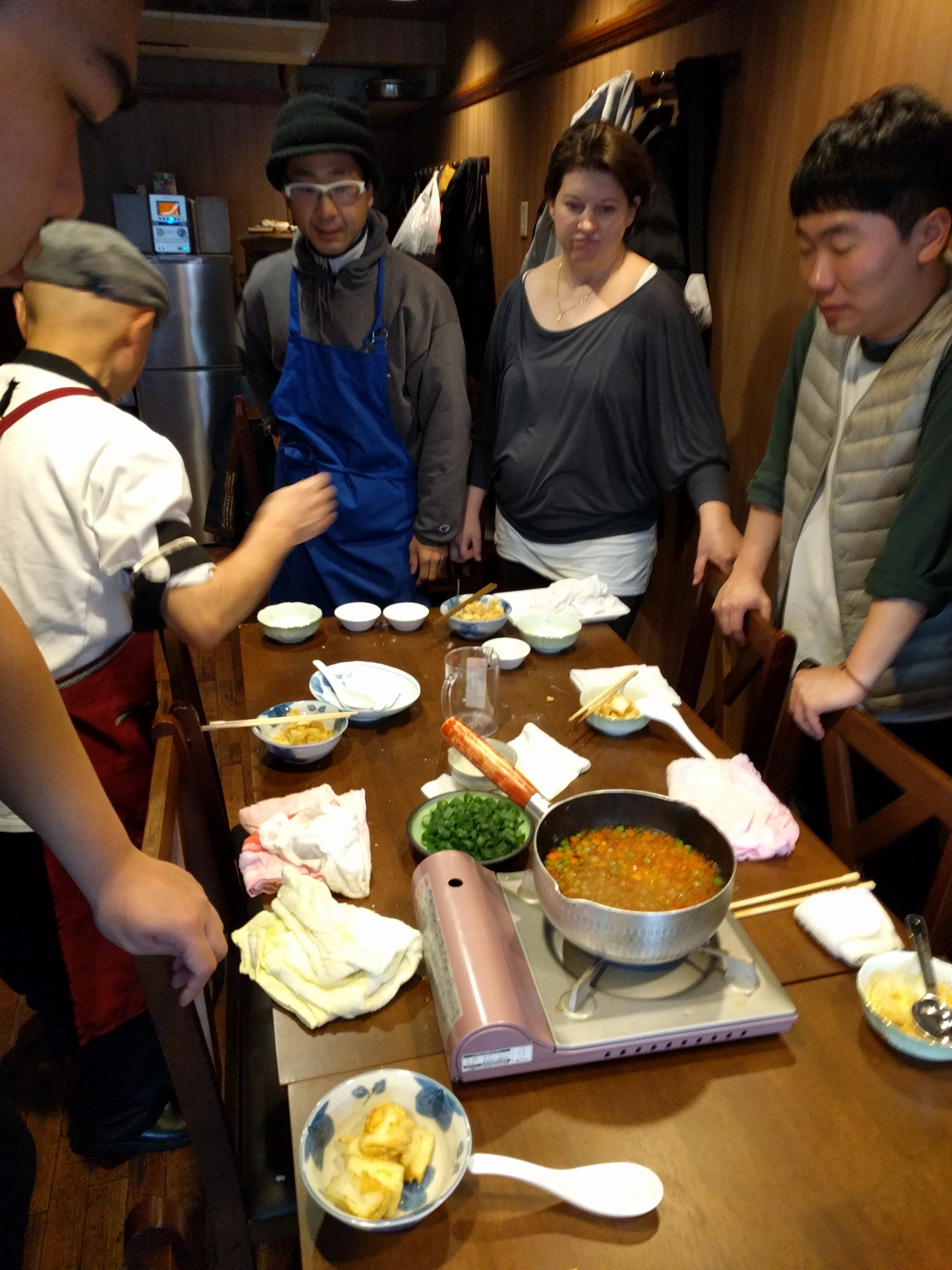
The second class we looked at 3 foods, Teriyaki Chicken, Agedashi Tofu, and some thinly sliced fried pork whose name I forgot. There was a much bigger class but it was pretty much the same idea. We all took turns, preparing and cooking the food, and it turned out really well. There are also a some interesting folks who show up to those events and it’s been a great way to meet some new people. The chef is a lot of fun to be around and the owner is very friendly as well. I look forward to the next lesson where we will be looking at tempura.
Those cooking classes look like so much fun! I’m looking forward to your cooking.
I’ll do my best!
Pingback: Living in Japan: Month Five – Garrett Kapp's Blog